UNESCO's latest recognition of Chinese characters as a world cultural heritage has left linguists worldwide collectively speechless.
Chinese characters are the only language system that allows you to read texts from three thousand years ago, while even Shakespeare from three hundred years ago can be a headache for English speakers.
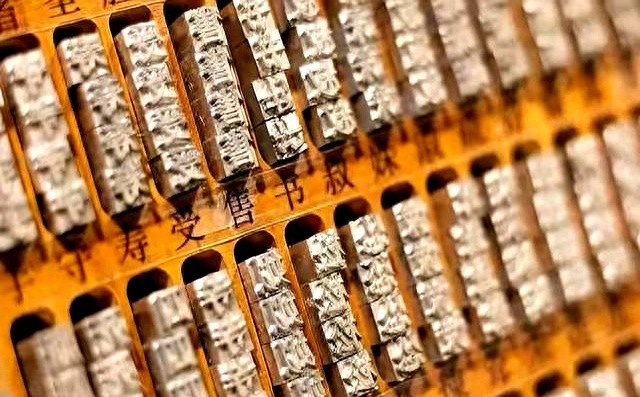
American linguists conducted experiments showing that Chinese text with the same content uses 30% less space than English text, yet is read 15% faster.
Modern people can guess the meaning of Shang Dynasty oracle bone inscriptions, while the English find medieval manuscripts as incomprehensible as a book from heaven.
The structure of Chinese characters inherently carries information compression; a single character like '家' encompasses a roof, a pig, and people, whereas English requires words like 'household' or even longer expressions to convey a similar concept.
Data from the 2023 Linguistics Summit reveals that the average dwell time on Chinese web pages is 8 seconds longer than on English web pages.
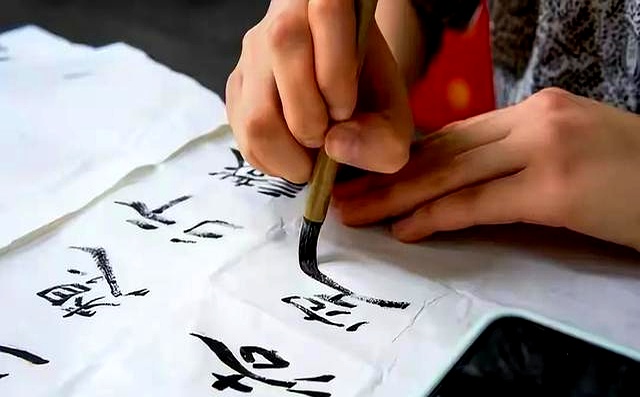
New words formed by Chinese characters do not require relearning pronunciation rules. Concepts like 5G and the metaverse are naturally easy to remember in Chinese, whereas English often creates awkward compound words.
Archaeologists have discovered that cuneiform and hieroglyphics from the same period have long since vanished, yet Chinese characters have maintained an unbroken lineage from oracle bone script to simplified characters.
Shanghai International Studies University conducted a test, finding that middle school students can understand 70% of the original text of "The Analects," while British students require extensive annotations when faced with Chaucer's poetry.
The Chinese version of United Nations documents is always the thinnest, and the speeches of Chinese representatives at international conferences are often the shortest.

The spatiotemporal characteristics of Chinese characters are bringing new ideas to artificial intelligence translation, and Google Labs has found that models trained on Chinese corpora are better at handling polysemous words.
The Chinese character thinking course opened by the University of Tokyo last year sparked a rush to enroll, with the professor's demonstration of deconstructing quantum physics concepts using Chinese characters leaving European and American students in awe.
This evolutionary path from pictographic to ideographic gives Chinese characters a unique advantage in expressing abstract theories.
A new password system developed by a Shenzhen technology company based on Chinese character structure is 17 times more difficult to crack than alphabetic passwords.
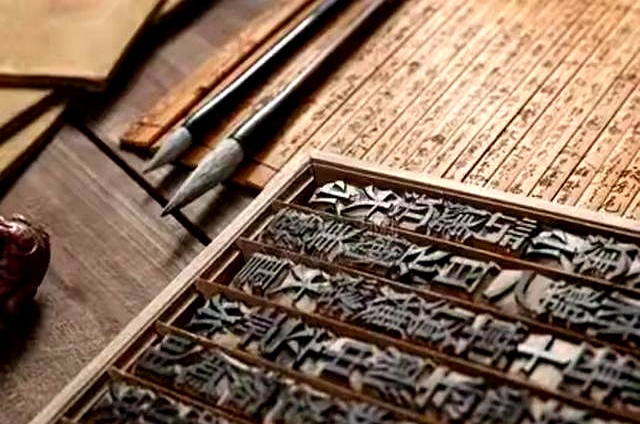
Historians in South Korea and Vietnam still rely on Chinese characters to study ancient texts in their own countries, a cultural influence unparalleled in the history of human civilization.
Latest brain science research shows that processing Chinese characters activates three more areas in both the left and right brain simultaneously compared to processing alphabetic writing.
Experiments at Beijing Language and Culture University have shown that bilingual children think about math problems 0.3 seconds faster in Chinese than in English.
While other ancient scripts have become museum exhibits, Chinese characters continue to evolve.
From oracle bones to emojis, this script carries the richest codes of civilization with the simplest lines.